

Version 2025 of Impurity Profiling Suite introduces automatic CPCA analysis for N-nitrosamines, making it easier to assign potency categories, estimate CPCA scores, and define acceptable intake limits. Read below for details, and contact us for help upgrading your software.
Highlighted Features | Improved Features
Highlighted Features
Implementation of CPCA Analysis for N-nitrosamines
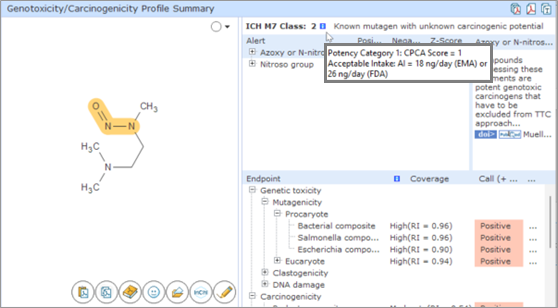
You can now automatically assess N-nitrosamines without experimental data using the Carcinogenic Potency Characterization Approach (CPCA). This latest update applies the CPCA algorithm to N-nitroso (N–N=O) functional groups, part of the “cohort of concern”, to derive acceptable intake limits. For each compound analyzed, you’ll receive the following directly in the module interface and ICH M7 reports:
- CPCA category assignment
- Estimated CPCA scores and contributing factors
- Defined acceptable intake limits for the assigned category
Improved Features
New Class 4 Assignment in Batch Reporting Mode
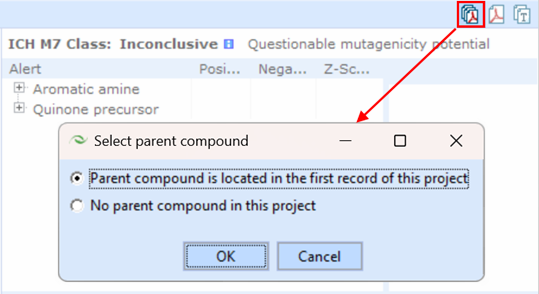
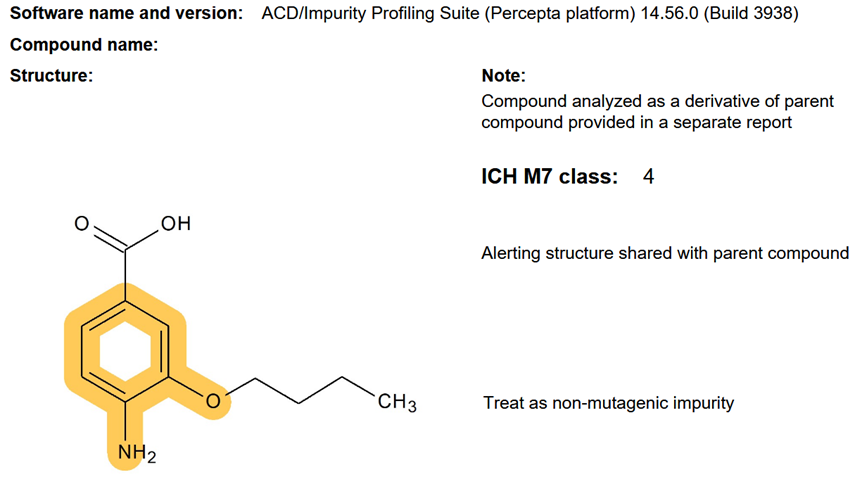
You can now analyze compounds within the context of the entire project in batch reporting mode, making it easier to identify and report shared alerting structures across related compounds in your projects.
- When generating batch reports for all compounds in a project, you can choose whether compounds are analyzed individually or if the first record should be treated as the parent molecule and the rest as its derivatives
- PDF reports generated in batch mode will now properly account for shared hazards and include Class 4 assignments when appropriate
Enhanced Ames Test Predictor
You can now expect greater accuracy of the Bacterial Composite (Procaryote Mutagenicity) predictor. Improvements include:
- Addition of >500 new compounds to the training data set
- Expansion of data including recently approved drugs, known impurities, and metabolites in drug-related chemicals, and a series of nitrosamine drug substance-related impurities
Want to learn more?
Read more about the full features of Impurity Profiling Suite, or contact us for help upgrading your software.