

Version 2025 of AutoChrom improves several features including template reporting, MODR visualization for 2D optimization, and more. Read below for details, and contact us for help upgrading your software.
Highlighted Features | Improved Features | Data Import & Export | Other Techniques
Highlighted Features
New Template Reporting for Full User Control in Creating Method Development Reports
- You can now customize your method development reports using template reports for data from LC Simulator
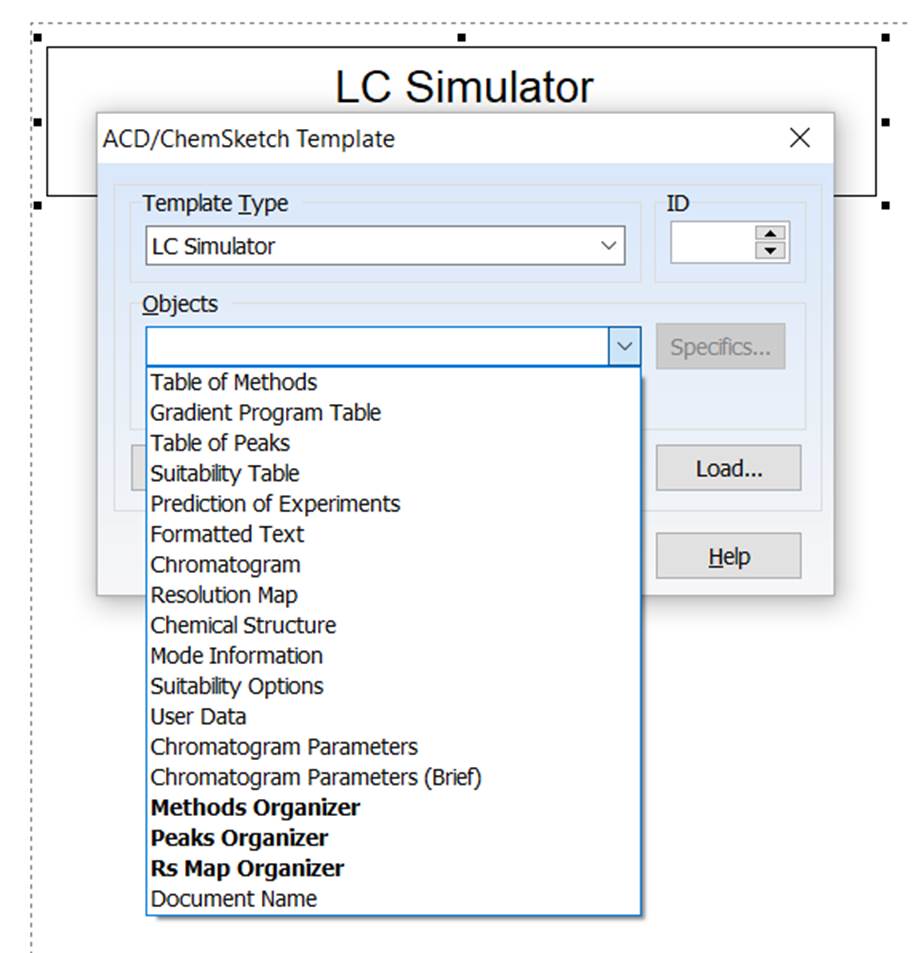
- You can use the formatted text option to add a variety of existing textual information to the report including the MODR, chromatographic parameters, peak data, and more
- You can better organize your data using the included organizers (Method, Peaks, Rs Map) when there is more than one piece (i.e. multiple methods, peaks, resolution maps)
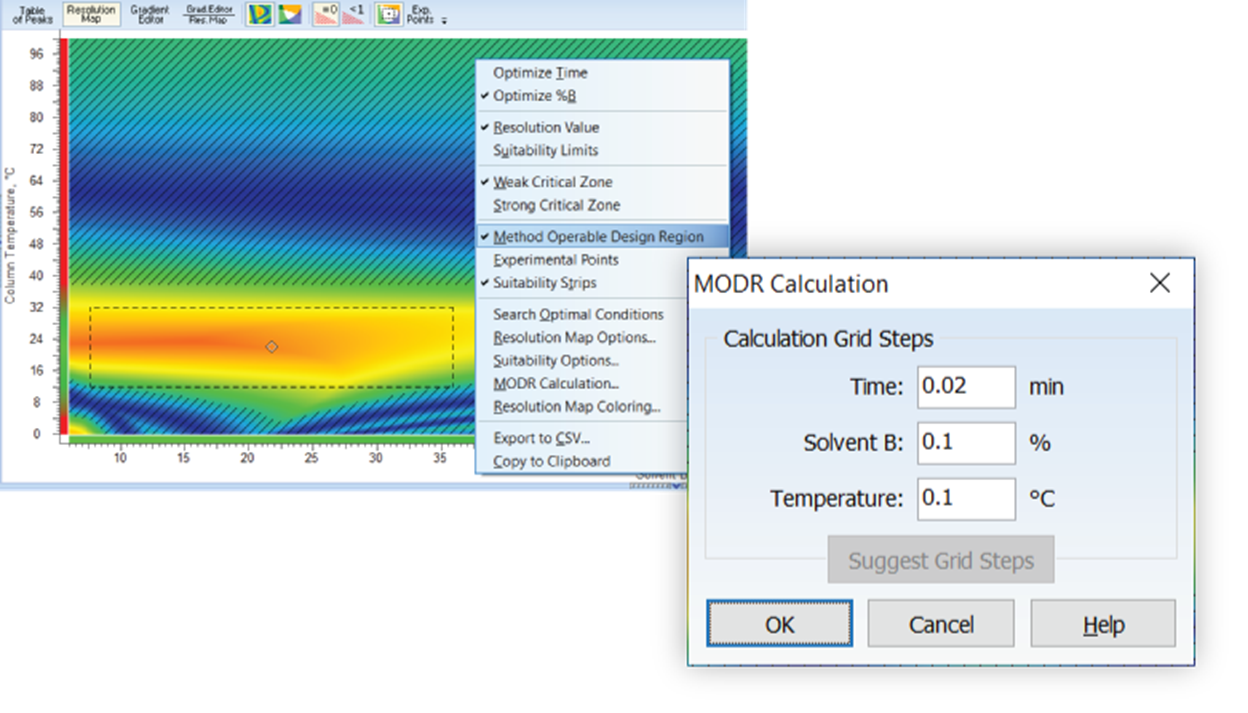
MODR Display and Options Have Been Added to LC Simulator 2D Optimizations for Better Understanding Over Ideal Working Region
Users can now display and report the Method Operable Design Region (MODR) and values across all 2D optimizations, except solvent ratio mode.
- Users have added control over the steps of the calculated MODR grid
Streamline Integration Setup in OpenLab CDS
- Delete Project Content privilege is no longer required, streamlining integration setup and reducing barriers
Export Robustness Wave to Generic Format
- AutoChrom now supports exporting the robustness wave in a generic format, enabling seamless integration with statistical software for comprehensive analysis
New Agilent Instrument Support
- Support has been added for Agilent InfinityLab Pro iQ and InfinityLab Pro iQ Plus, expanding instrument compatibility and enabling broader deployment across labs
Improved Features
Data Analysis & Processing
Improvements in Copy of Chromatogram to Clipboard
- The enhanced copy chromatogram to clipboard now includes critical zones and gradient breakpoints, giving users a better picture of their method and how it fits their suitability criteria.
Enhancements in the Movement of Chromatograms between LC Simulator and Spectrus Processor for Better Visualization and Full Picture of Selected Chromatograms
- Enhancements to movement of data between LC Simulator and Spectrus Processor include:
- Users now have more flexibility with the option to select current only, all as series, or all separately when moving chromatograms from LC Simulator to Spectrus Processor
- Each chromatogram will now contain all user data from the suitability table
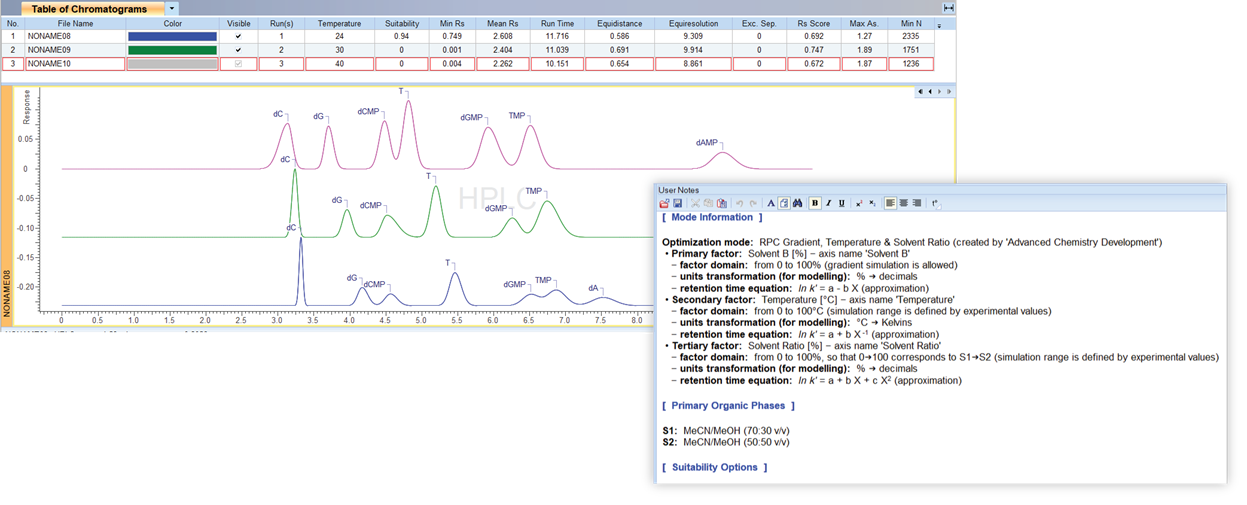
Inclusion of suitability data and optimization mode when chromatograms are transferred to Spectrus Processor gives users the full picture for their selected methods. - Users can now access spectral user notes including mode information, primary organic phases for Solvent Ratio factors, and suitability options
Simplified Chromatogram Peak Detection
- You can now filter your picked peaks by setting a minimum area threshold (as a percentage of the total) and automatically integrate all peaks above this limit
Improved Visualization of Chromatogram Structures
- You can now adjust the size of structures displayed on chromatographic peaks to better visualize those of interest
Reporting
Display Intensity Values on MS Peaks
- You can now view detector and relative intensity values directly over mass spectral peaks for easier analysis
Improved Visualization of Structures on Chromatograms
- You now have the ability to display chemical structures more clearly on chromatographic peaks in your reports
Updated Default MS Reports
- You now have more control over MS reports with the ability to generate improved default mass spectra reports
Expanded Component Reporting Options
- You can now report component mass spectra by collision energy, and include component UV spectra, giving you a more complete view of your data
Ease of Use
- You can automatically revert back after showing all tabs of open data with the new Fit to Tab Names button
- You can now remove any unnamed components from the Table of Components with a single click
- You can now more easily set modifications to your mass spectra analysis with an improved Component Interpretation Options dialog box
- You can now display intensity values (detector or relative) over mass spectral peaks to more easily analyze your data
Features for Other Techniques
As always, you can process data from other analytical techniques in AutoChrom. We’ve improved features for these techniques as well:
Processing NMR Data with AutoChrom
Data Analysis & Processing
Allow for Small Variations in the Integral Range of Peaks in External Standard qNMR
- You can now do external standard qNMR calculations using peaks whose integral ranges are not identical between replicates, which often occurs when working with manually defined integrals
New Parameters to Support Broader Workflows in External Standard qNMR
- You can now perform external standard qNMR calculations using replicate samples with different masses but constant volume with the help of:
- New parameters added to Concentration Calculation Tool and default report template
- Average w/w% (averaged across different replicates)
- w/w% RSD%
- Maximum Peak-to-Peak RSD% (intrasample)
- Mass and volume information included in the table of the Used Replicates popup menu
- New parameters added to Concentration Calculation Tool and default report template
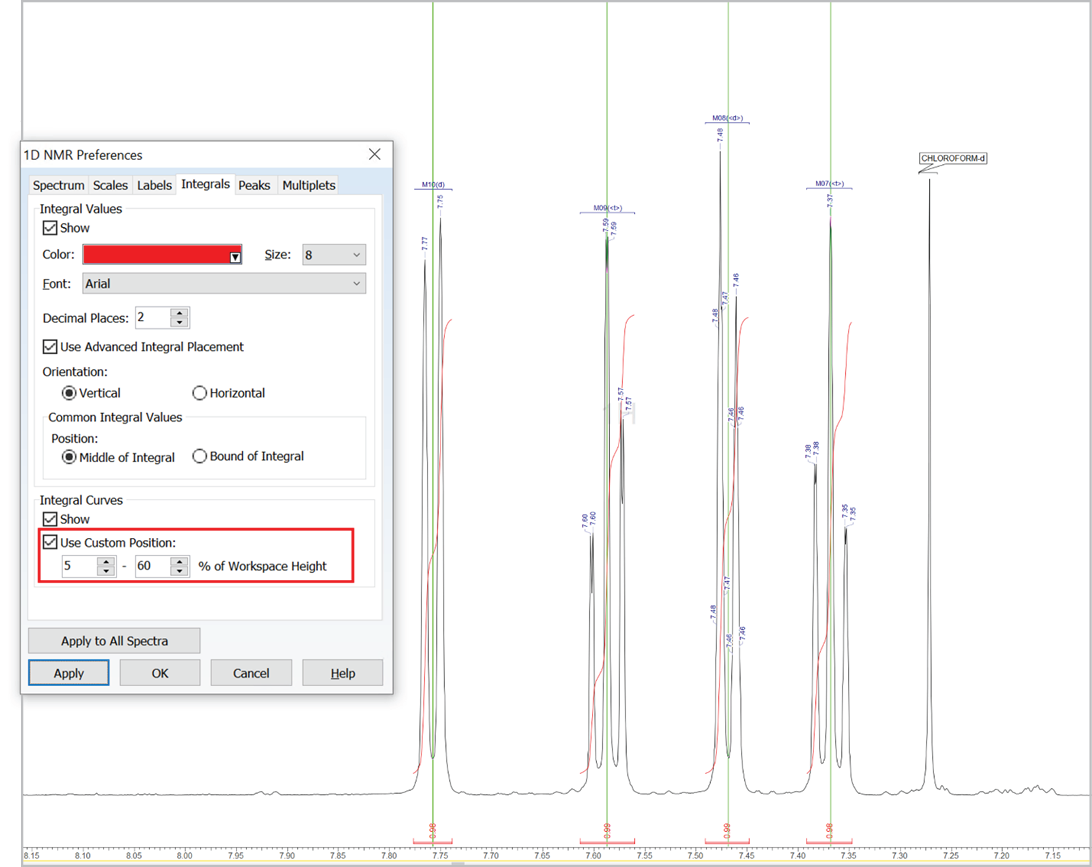
Customize the Position of Integral Curves
- You can now set a custom position for integral curves in the processing interface and reports by defining the desired vertical span of the highest curve in the displayed spectral region (as % relative to height of spectrum window, regardless of the vertical scale factor value)
Apply Unique Baseline Correction Parameters in Each Dimension of a 2D NMR Spectrum
- You can now apply baseline correction in each dimension of a 2D spectrum independently, allowing you to apply different parameters in each
Automatically Analyze Multiplets in 19F NMR Spectra
- You can now automatically analyze 19F spectra of structures with multiple fluorine atoms with an improved algorithm for better detection of first-order multiplet patterns
Improved Identification of Peaks Near Water in 1H NMR Spectra in DMSO
- You can now more accurately identify spectral peaks that appear at a similar position as the water peak in 1H spectra in deuterated DMSO (e.g., N-Me, O-Me, etc.) with an improved automatic analysis algorithm
User-Added Solvents/References Available to Macro Commands for NMR
- You can now utilize user-added solvents or references in macro commands by first invoking the new LoadSolventsTable macro command
Reporting
Optimize the Display of NMR Spectra in Reports
- You can now easily remove whitespace at the outer edges of frequency axes in 1D and 2D NMR spectra in reports. The new Auto Fit option in the Report Page Setup dialog box automatically selects a display region within ±0.5 ppm (¹H) or ±5 ppm (other nuclei) of the outermost peaks.
Summarize w/w% Values in qNMR Reports
- You can now include w/w% values for each replicate in the Sample Data table of a qNMR report
Ease of Use
- You can now quickly select/unselect all NMR integrals except for that of the solvent in external standard qNMR with new a context menu
Want to learn more?
Read more about the full features of AutoChrom, or contact us for help upgrading your software.